
On paper the retail chain is one company. In practice every store has its own connection, its own contract and at national level multiple grid operators. Add franchise structures and different internal departments, and it’s clear why energy is rarely managed integrally.
The environment has also changed. Grid congestion makes expansion uncertain, contracts are more complex and the same kWh can have a different financial impact per location. The question is therefore no longer: how do we consume less? But: how do we make our energy predictable and controllable?
The risk is at chain level
Energy consumption is local — refrigeration, lighting, ventilation, checkout systems. But the risk is at chain level. The CFO sees one large cost item, while underneath it hundreds of small contracts are hiding, each with their own rules and tariffs.
This leads to two pitfalls: rolling out the same measure everywhere while the return differs per location, and missing opportunities because no one is sure what the effect is on comfort or continuity.
The first step is not hardware, but data
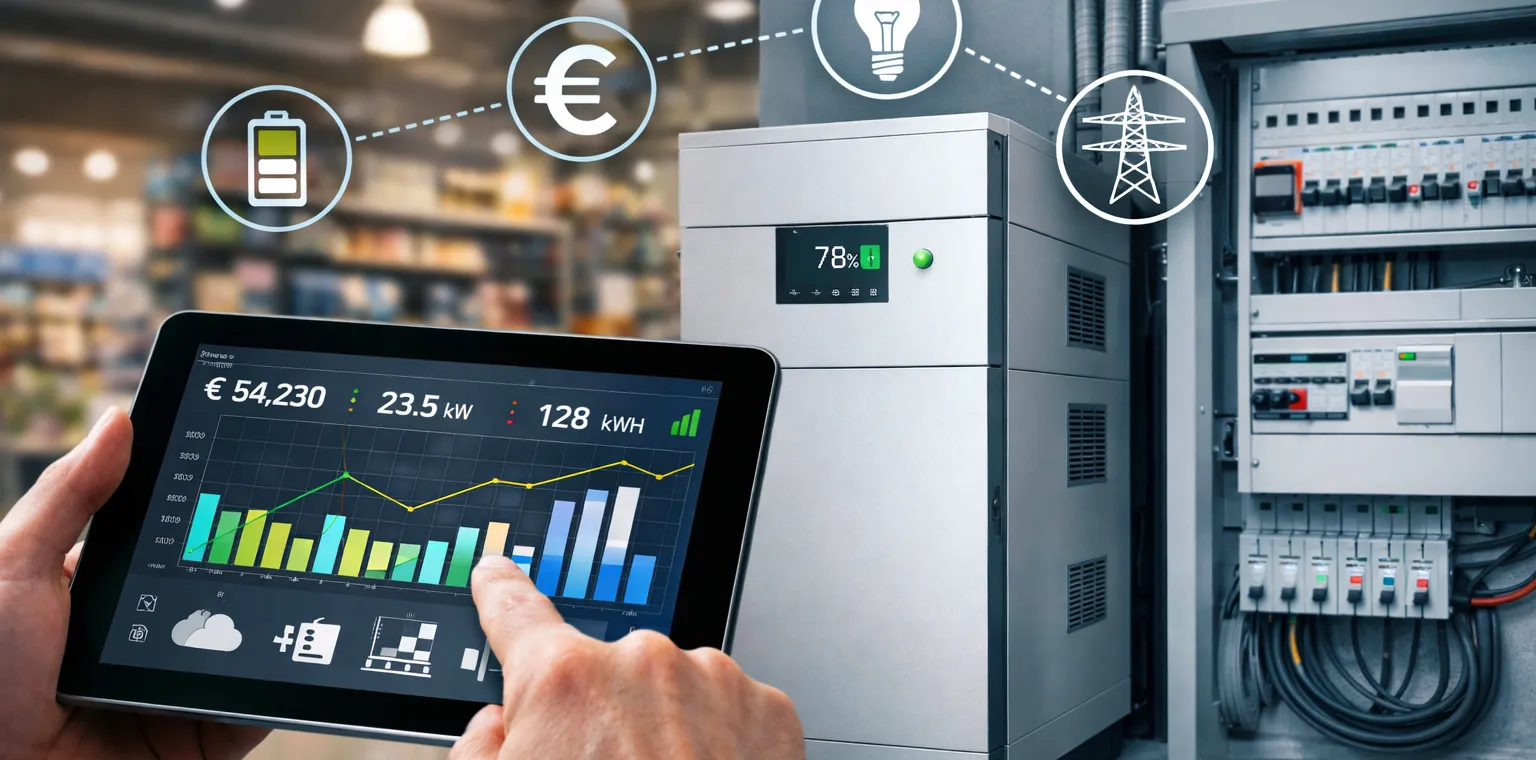
Ensure all locations measure and report in the same units and dashboards. Bundle data from smart meters, building management systems and charging points. When that foundation is right, stores can be managed as a fleet: each branch remains autonomous, but the steering comes together centrally.
A compact battery — say 20–30 kWh — can then provide a solution. Not to supply power for days, but to flatten peaks, shift consumption smartly and take advantage of fluctuating energy prices.
Once all stores are in one system, purchasing power and better risk management also emerge. Energy transforms from an unpredictable invoice into a strategic advantage.