
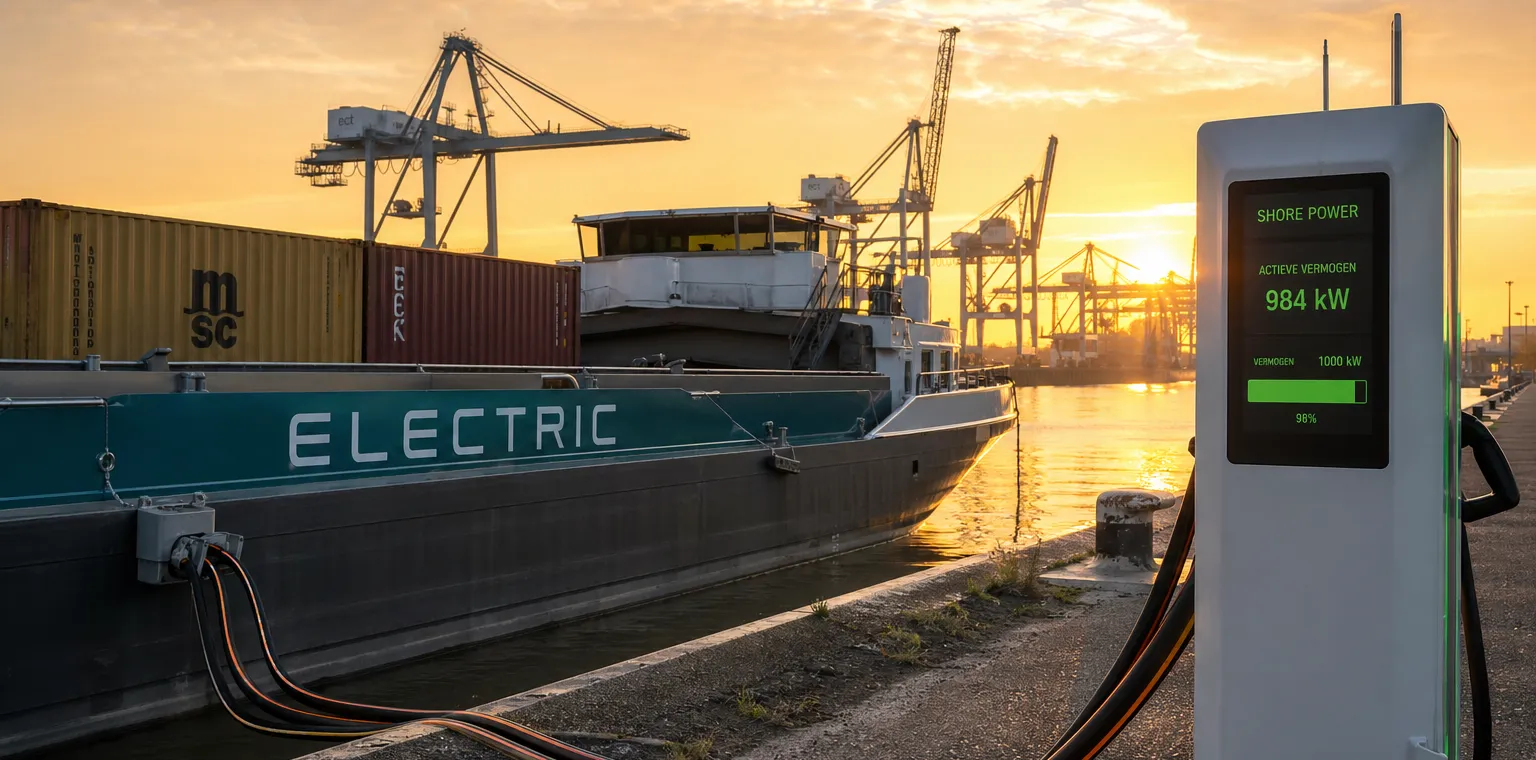
The electric barge is at the quay, but doesn’t leave fully charged. Not because the ship isn’t ready. Not because the crew is waiting. But because at that moment there isn’t enough capacity to charge the next round properly, without causing a new problem somewhere else in the operation.
The investment has been made. The ambition is clear. Cleaner logistics, less emissions, electric sailing, shore power — the direction is right. But once operations have to run, it turns out that electrification alone doesn’t deliver a working system. The real bottleneck often isn’t on the water, but in the energy system behind it.
Not one bottleneck, but several at once
Then loading windows, peak powers, berth planning, grid capacity, other large consumers and energy costs all come into view simultaneously. And then it becomes clear that the question is no longer just whether electric sailing is possible, but whether the entire surrounding system is smart enough.
That is the new reality for many port-based companies. The connection is limited. Logistics doesn’t plan neatly. Ships come when operations demand it. Shore power, charging, production and other installations sometimes all draw on the same capacity at once. And downtime is not an option.
One isolated measure just moves the problem
An extra charging point, battery or heavier connection can be useful, but without governance the vulnerability remains. The problem just shifts: from diesel to capacity, from emissions to congestion, from sustainability to costs.
EAC certificates as an extra value layer
Electricity supplied to transport or shore power can, if the system is technically and administratively well set up, generate extra value via EAC certificates. That’s when it becomes interesting to steer in real time on which energy flow goes where, how it’s measured, distributed and settled, and when own generation yields more value in charging than in feed-back.
In the port, electrification is not the end solution. It is the beginning of a new governance question. In a complex operation, more capacity is rarely the solution. Smarter governance is.